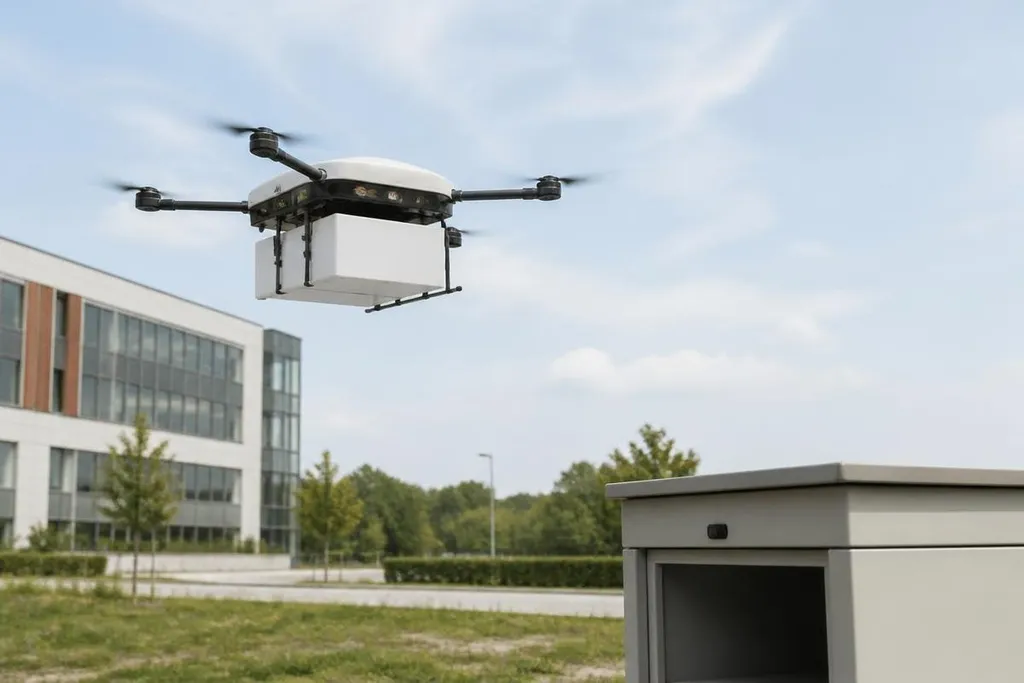
A delivery drone can move a small package without sending a van along the whole route. That can save road time on short trips, but the aircraft adds limits around weight, weather, landing space, noise, and safety.
Quick read
- Delivery drones fit light packages and repeat routes with clear landing points.
- Remote supervision still matters when sensors meet trees, wires, people, or bad weather.
- A pilot needs local air rules, safe handoff points, and a backup plan for failed flights.
Where drones help
This aircraft works best when the package is light, the destination is known, and the trip has few obstacles. A medical sample between two nearby sites may suit this model better than a large grocery order sent to an unknown address.
The aircraft can travel directly rather than follow roads. That may shorten a trip when traffic or poor road access slows a van, while a fixed flight path can make repeat work easier to plan.
The gain depends on the full process, including loading, battery charging, landing, and the final handoff.
Package size sets a hard limit. The same aircraft that carries a small parcel cannot replace a van carrying several orders, bulky goods, or items that need careful temperature control. The useful comparison is the whole delivery run, not flight time alone.
How a delivery flight works
A typical system combines a drone, a control station, software for route planning, and a package release or landing method. Cameras, GPS, and other sensors help the aircraft track its position and avoid some hazards, but no sensor sees every wire, branch, bird, or person in every condition.
Some flights may use autonomous control for routine movement while a remote operator watches the mission. That operator may need to pause, reroute, or land the drone when the planned route no longer matches the real scene.
The last few metres can cause more trouble than the trip itself. A drone needs a safe place to land, lower a package, or release it without striking a person. If a customer has to walk to a separate handoff point, the service may shift work rather than remove it.
A flight time alone can't show whether a delivery trial works. The record should name the drop site, weather, package weight, test date, and human response when the handoff fails. Delivery drone reporting from Robot24.com can place those facts beside the result before the next section sets out the risks operators need to plan for.
Risks that need a plan
Safety comes first because a falling aircraft or loose package can injure people or damage property. Operators also need rules for lost communication, low battery, sensor faults, blocked landing areas, and sudden changes in weather.
Noise can affect people near homes, schools, hospitals, and workplaces. Repeated flights may be acceptable in one area and a poor fit in another, so a trial needs a way to record complaints and change routes when needed.
Privacy brings another concern. Cameras and location data may collect information about people or private property during a flight. A service should explain what it records, how long it keeps that data, and who can access it.
Airspace rules vary by location. Approval may cover the aircraft, the route, the operator, and the type of flight. A company that has permission for a controlled test may still need more work before routine service begins.
What remains unproven
A flight demo can show that a drone lifts and moves a parcel. It doesn't show the cost of running hundreds of deliveries, handling failed handoffs, charging batteries, maintaining aircraft, or paying staff to watch missions.
The harder test is repeat work. A useful service needs a high rate of successful deliveries across changing weather and busy public spaces, with clear records when a flight stops early. Without that evidence, claims about lower costs or faster service remain estimates.
I'd approve a delivery-drone pilot only after the operator publishes its route limits, failure process, noise controls, and full cost per delivery.
Delivery drone checklist
Use these checks before backing a trial:
- Package fit: Set a weight and size limit that matches the aircraft and the handoff method.
- Route control: Mark trees, cables, buildings, roads, and places where people gather.
- Landing plan: Assign a safe delivery point for every address, with a staffed fallback.
- Weather rules: Set flight limits for wind, rain, heat, and poor visibility before launch.
- Failure response: Record who stops the flight, collects the package, and checks the aircraft.
- Cost record: Count loading, supervision, charging, maintenance, permits, and failed trips.
That checklist turns a flight test into an operating test. The next useful result is not a longer video; it's a published record of successful deliveries, stopped flights, and the cost of each one.